
Lost and Found

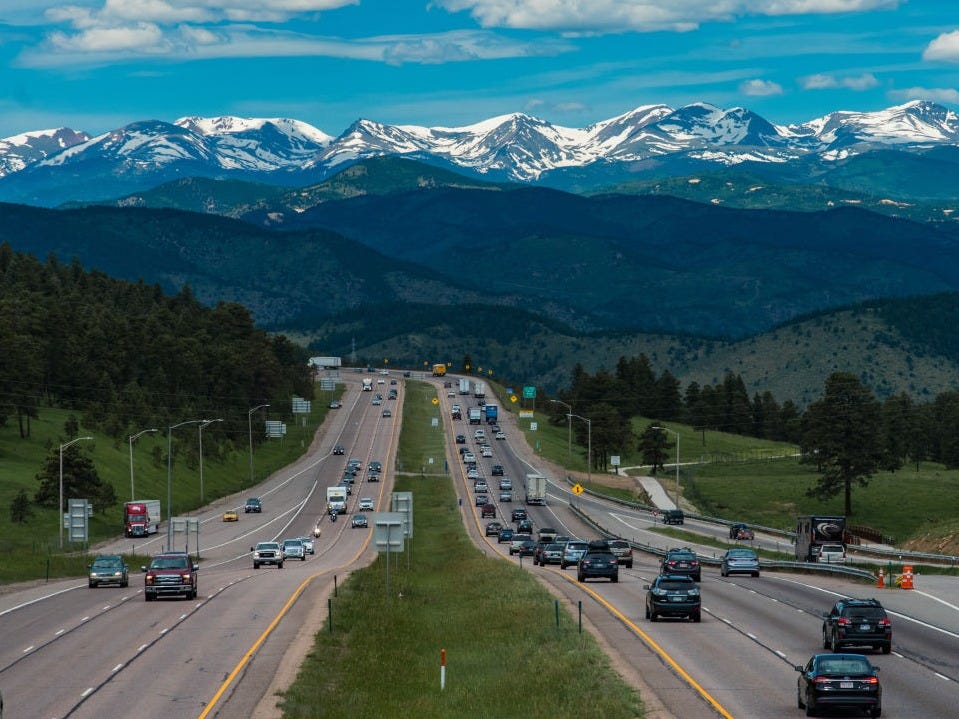
John found the package on the hillside he was clearing. It was a beat-up cardboard box bound with thick plastic bands, two vertical, two horizontal; all four were held down with thick tape, the kind with tiny ropes inlaid. Attempting to pick up the package, John realized why the cardboard was reinforced: it was heavy. Wondering if the shipping label was still intact, John turned the box over and around until he found it still folded inside the plastic sleeve, weathered, but legible. He removed the purchase order receipt but kept it folded, minding the rightful owner’s privacy. Whatever was inside wasn’t his business, John figured. He found where the box was supposed to have gone, but a wreck on the interstate must have lost it in the tall grass and brush, where it sat, getting sun-beaten and rained and snowed on.
John thought he remembered the particular crash that cast this box into its forgotten place: It was weeks before Christmas, and one of the major shipping companies had a truck jackknife in a blizzard on the downhill slope of the pass, then it went over and flipped, turning into a giant piñata scattering gifts across the hillside. It made the news, though the driver lived. The reporters spun it as a Grinch-inspired plot to ruin holiday cheer. Their commentary didn’t intend to make it seem like the driver was at fault, but that’s how John interpreted their silly, tasteless anecdotes.
The order was placed over two years ago. John thought that maybe the hopeful owner of whatever was inside this heavy box had received a replacement order, as many companies will do these days. Then he thought that perhaps the person had moved; this he thought because for a moment he imagined himself delivering the heavy box to its destination after hundreds of days being lost outside in the wilderness that grows beside the road; thick untrampled nature for no one sets out from the city to hike the hills polluted by road noise and trash tossed from widows of careless travelers. That is, no one but John, whose employer was the contractor hired to clear this stretch of roadside of overgrowth.
It was nature that no one appreciated because a flippantly flicked cigarette could set it and the neighboring forest ablaze. It was those pine and aspen trees that mattered, not the grass, scrubs, and sparse wildflowers. He took the box over his shoulder, hiked it up the hillside, and put it in the cab of his truck on the passenger floorboard. Then John went to the truck bed and retrieved a weedwhacker. Before starting it, he stood and admired what no one else does, what no one else will, what everyone drives past at 65 miles per hour. Then he went to work destroying what only he appreciated.
He swept the machine back and forth for two hours, clearing sections of the hillside before hiking back to his truck to refill the fuel tank of his weedwhacker. It is July, the snow has melted; the forecast is hot, even in the mountains. He sat on the passenger side, for it was farther from traffic. There, he sipped coffee from his thermos and thought about where the box was supposed to go. It wasn’t too far from where he lived. He could drop it off on the way home. John shook his head. That would be a waste. The person had already forgotten and moved on. Whatever was inside was unimportant, despite its weight. It could be replaced.
John returned to the hillside for another two hours before refilling again. This he repeated four times in total, walking up and down the hill, sweeping the long neck of his machine left and right, watching its neon green plastic whip shred the plant life that all others overlooked. He said a prayer for every decapitated flower. At every break to refuel, he asked the grass for forgiveness. John found himself strangely sentimental when at work, clearing brush and dangerous grass. The work is essential because it keeps the trees safe. No one thought of the littler plants and how they feel about being sacrificed annually for the sake of taller things, some of which changed colors in the fall, bringing tourists to the mountains whose money flowed through countless hands until it eventually made its way to John’s, paid to hold a butcher’s tool.
He sweated throughout the day, taking little breaks to drink water and drink in the unappreciated plants before destroying them as passersby watched from their fast-moving cars. The work wasn’t too physically demanding, but for John, it was emotionally draining. He was young and still romantic about the world. In his heart rested a love for nature that he hoped to one day turn into an ecology degree that would get him a job with the Forest Service. John had plenty of time to think as he watched the long grass and flowers fall on their sides. Tomorrow, a second crew will come and rake their corpses into piles and bag them unceremoniously. Then the dead would be dumped, and having only been enjoyed by him, only he could forget them.
Lost in mourning, John had forgotten the heavy box in his truck. Standing inside the open passenger door for a final gulp of water before heading home, he removed the packing slip once again to read the address. He decided to deliver the package, whatever all that weight was. It wasn’t far from his house in the city, a short detour in the direction of his favorite restaurant, where the food was made like his grandmother used to. He’d stop there after dropping off the box. It would be a reward for doing what he felt was the right thing, even if the box had been forgotten like the grass and flowers he had chopped down. Maybe by delivering it, he would somehow be honoring what had once been wanted only to be lost and concealed by the beauty that only he cherished, little things enjoyed by him, and the hillside that nourished what he woefully ruined.
As he drove, John thought about the weight he lugged up the hill. The box was about 16 inches tall by 12 inches square. For being so small, he estimated that it weighed fifty pounds. He believed that it weighed so much because it was important. Glancing from the road to look at the box, he pondered what could be so small and heavy. Maybe it was a part for a big machine, perhaps a bronze valve, or maybe an electric motor or a battery. Something someone needed, else they wouldn’t have ordered it. He wouldn’t pry the answer out of them. He could withstand permanent nescience, enjoying instead lifelong curiosity. Mysteries are free thrills. But, John knew, that if the box’s owner offered, he would just as much enjoy the reveal of whatever it was that had lived inside cardboard on the hill, hidden by nature, until he found it.
The tires of John’s truck rubbed the curb as he parked. The sun was setting, and music was playing from the garage. Whoever lived there was home. Maybe the weight wouldn’t be a mystery for long, thought John. He walked to the passenger side, opened the door, and shouldered the box with a groan and a little hop to settle it comfortably. It felt good, sitting on a muscle tired from a day of holding a weedwhacker. He let the weight sink into him and grinned before closing his truck’s door and starting up the sidewalk to the house.
Hearing one grunt and then another in the garage, John figured he would deliver it there rather than leave the heavy box on the doorstep. If he did, perhaps he’d learn what was inside. In a friendly tone, he called out a hello and knocked on the siding before peeking his head under the half-opened garage door. Inside, he saw a modest gym and a man about his father’s age sitting on a bench. John knocked again, then waved and said hello, startling the sweating and heavy-breathing homeowner.
John set the box on the driveway and said, “I believe this might be yours? I found it today while I was working.”
“I didn’t order anything,” said the homeowner as he stood.
“No, sir, I think this one was lost. I’m not a deliveryman. I found this box with your address on it.”
“Oh,” said the man as he opened the garage fully. “What is it?”
“I didn’t bother to look,” said John. “But it’s heavy.”
“That box looks more worn out than I am.”
John laughed at the man’s self-deprecation and said, “Nah, you look solid.”
“Thank you,” the man said as he knelt to retrieve the packing slip. “Where’d you find it?”
“Down the hill on Soren’s Pass. I think it was lost in that big accident last year.”
“What were you doing up there?”
John looked himself up and down, calling attention to his dirty clothes. “Fire mitigation.”
“Ah, no wonder you didn’t mind lugging this thing around. You’re already fit.”
“Thanks. You must be Robert. I’m John.”
“That’s me,” said the man, reaching forward. “And this must be the kettlebell I didn’t get for Christmas a few years back.”
“So that’s what it is,” said John, completing the handshake.
“Box looks about the right size,” said Robert. “Do you want it? They sent a replacement.”
“I would, but I don’t know how to use them. Thanks, though.”
“Got a knife?” said Robert. “We’ll open ‘er up, and I’ll show you some basics, if you’ve got time.”
“I do,” said John, smiling.
Thanks for restacking!